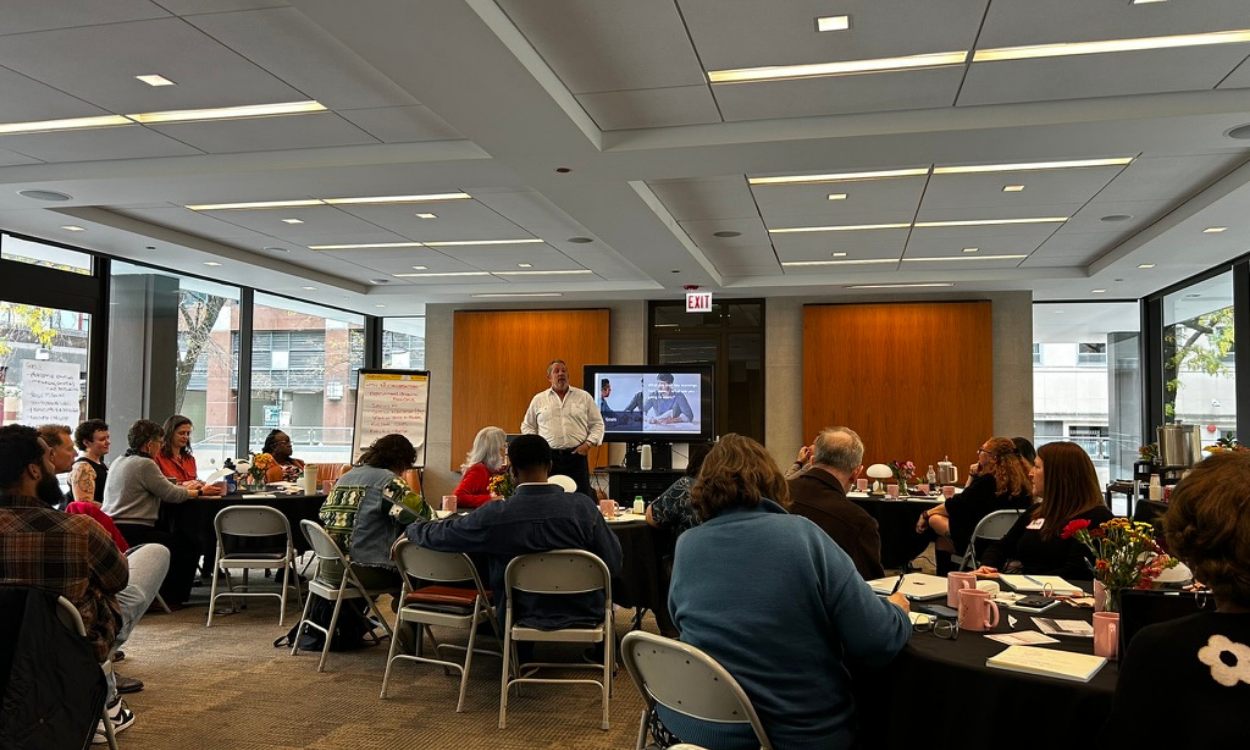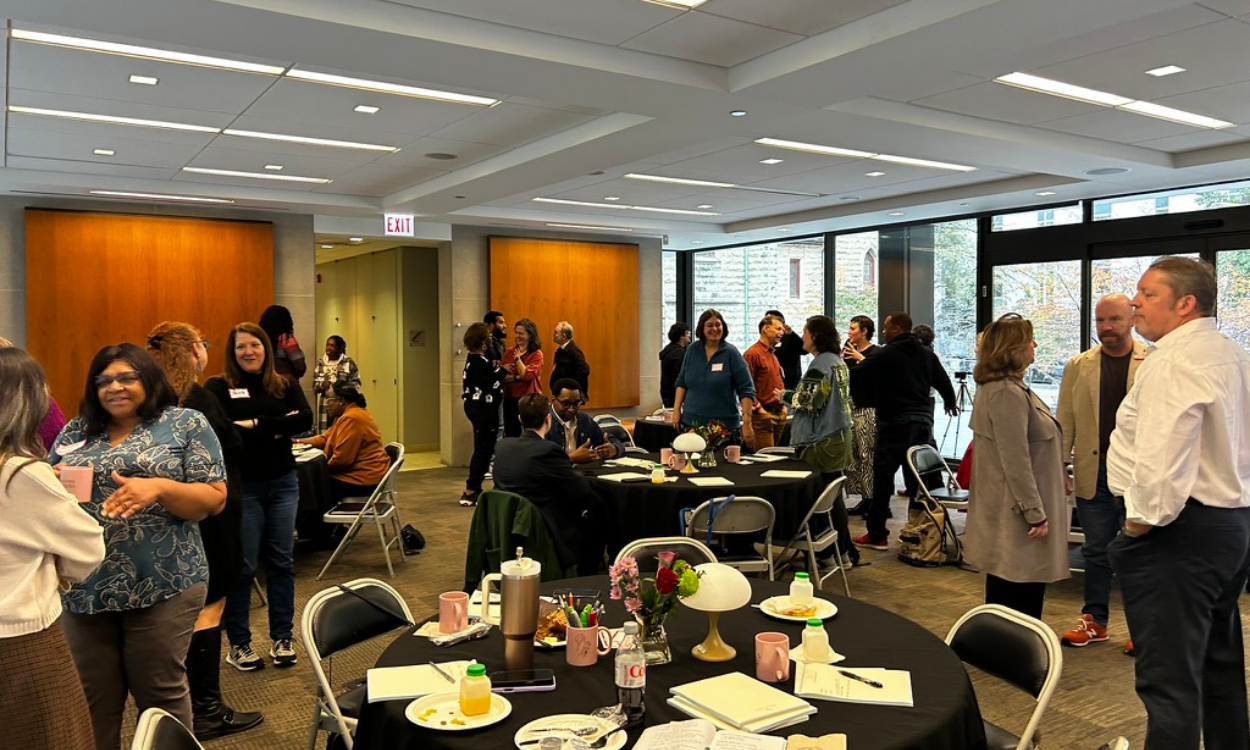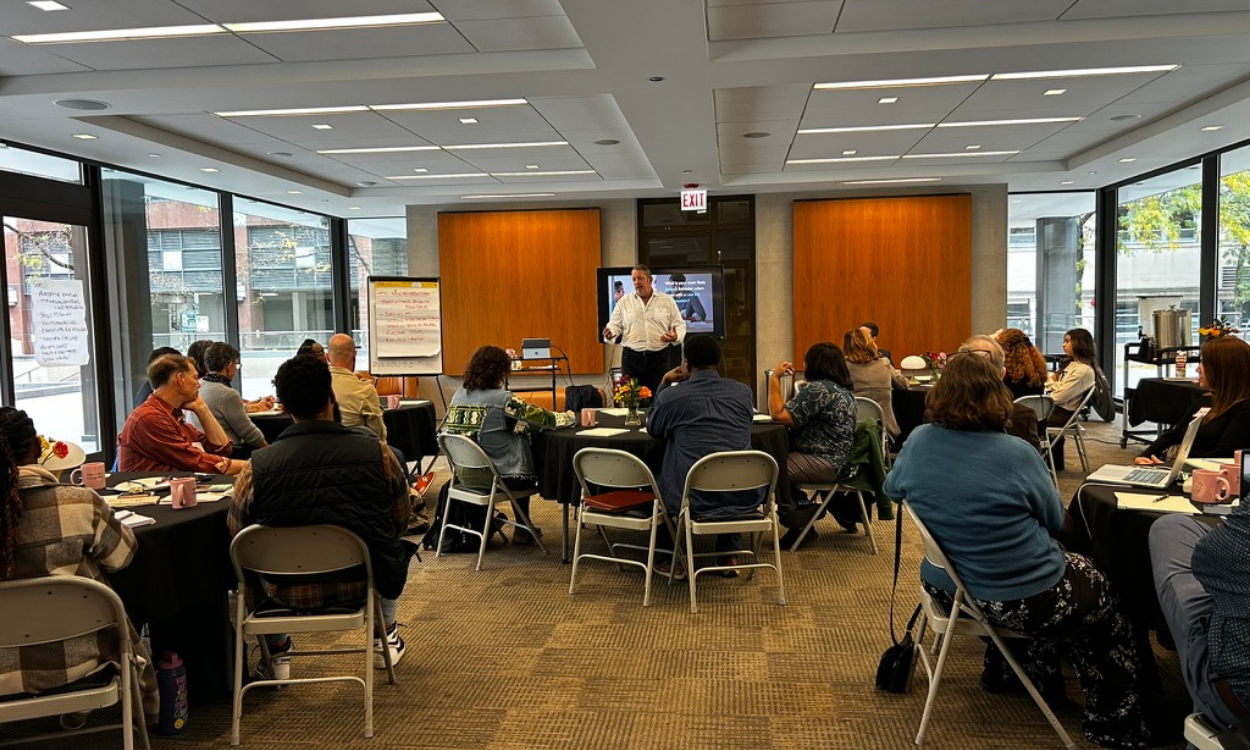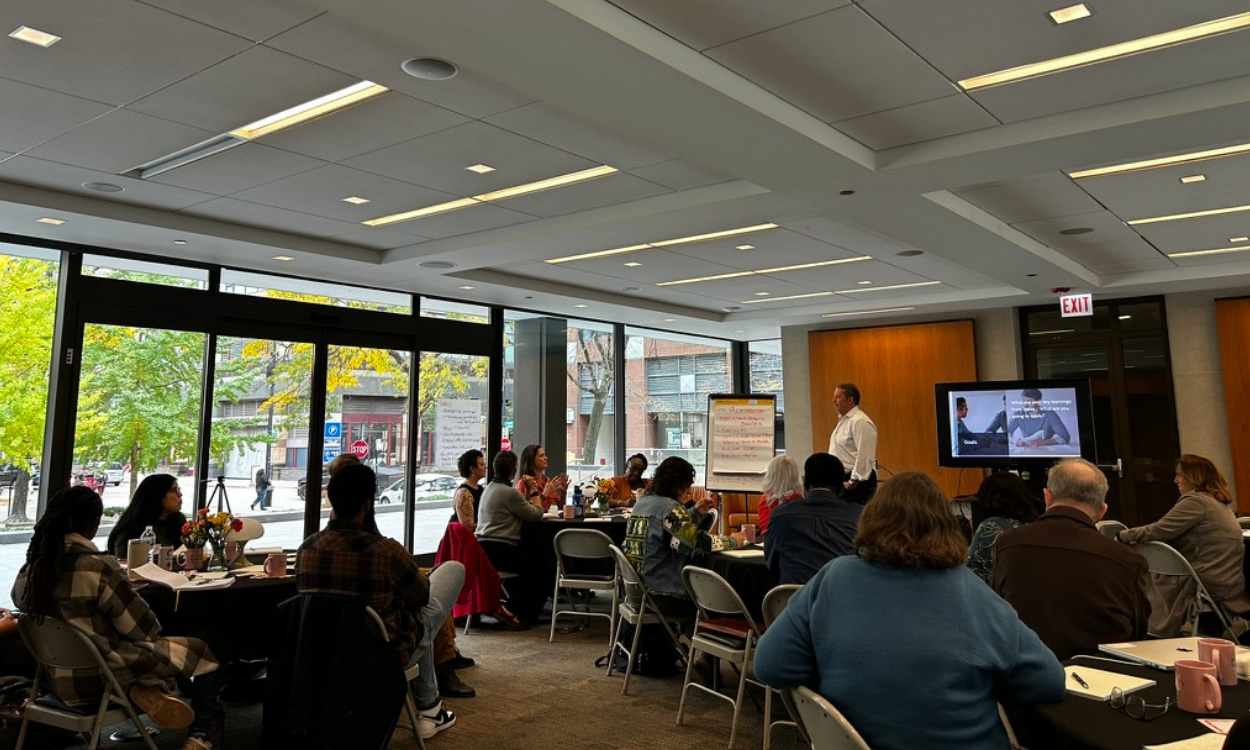
On November 5, partner leaders from across the Episcopal Charities network gathered for a day of learning and reflection. Facilitator Bill Benjamin returned to build on work many of them began with him at earlier sessions. The focus was on one of the hardest parts of leadership: how to have difficult conversations without losing the trust that holds a team together.
Episcopal Charities' Support: More than a grant
Much grant-making is transactional. Ours is relational. Our Inner Capacity Building Program reinvests in the individuals who lead that work, because we believe that a leader's emotional and spiritual health shapes the culture and success of their organization.
Twice a year, leaders gather for day-long Leadership Cohort Gatherings. Between them, our Nonprofit Partner CEOs meet every other month for lunch and conversation on similar themes. We are now opening the program to leaders from every partner in our orbit: parishes, nonprofits, and Catalyst projects alike.
Our Executive Director, Matt Berryman, often cites Peter Drucker: "Culture eats strategy for breakfast." When leaders neglect their own inner work, the effects flow downstream to staff, congregations, and the people they serve.
Leaders also carry that weight largely alone. "They often don't have a place where they can come and share who they are, what their fears are, what their hopes are," Matt said. Skills training is now a click away. As a faith-based organization, we can offer something unique: a place to ask, "How is it with your soul?"
You feel before you think
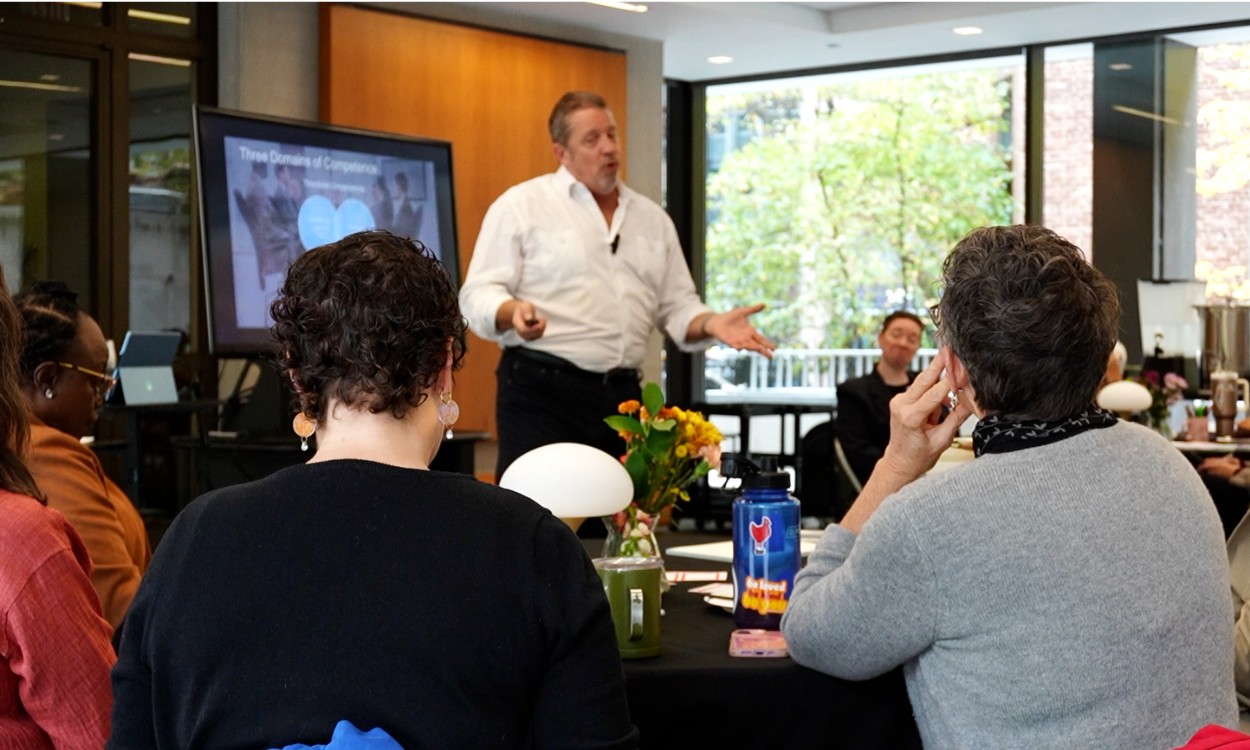
Bill Benjamin came to this work after struggling as a newly promoted leader at a software company. Emotional intelligence training changed how he led.
Our November 5th gathering focused on what Bill calls "the last 8%" conversations: the hard, honest exchanges that strong teams need and most of us avoid. His firm's research with 70,000 people shows that teams perform best when they combine high care with high accountability. "We don't do culture just to be nice," Bill said.
He grounded the day in brain science. The amygdala, the brain's threat detector, reacts before our thinking mind catches up. "If you remember nothing else from today, remember that you feel before you think," he told the room.
To show what that costs us, Bill held up four markers. Each one stands for a slot in our working memory. With four, we can see 24 possible combinations of ideas. Drop one marker in a tense moment, and only six remain. We lose 75 percent of our options. We also tend to feel more certain we're right.
Carrying it home
We hope these ideas travel beyond the day itself. At Youth Guidance, they already have. CEO Michelle Morrison brought her executive team to an earlier session, and the language stuck. "People will just say, 'Michelle, we need to talk. I need to have an 8% conversation with you,'" she said. "The whole concept of markers is real. This is part of our culture now."
For Natalie Rodriguez, MPPA, PMH-C, director of Hopeful Beginnings, the program created time to step back. In her first year, she led the organization while also handling case management. Reflection through the program helped her see that this was not sustainable, for her or for the agency. She learned to bring others into decisions and to grow leaders from within. Hopeful Beginnings has since grown from four or five staff members to sixteen.
Most of all, we want every partner leader, new or longtime, to know they are cared for. As Matt put it, the relationship is "every bit as important as the financial grant."
Making room to reflect
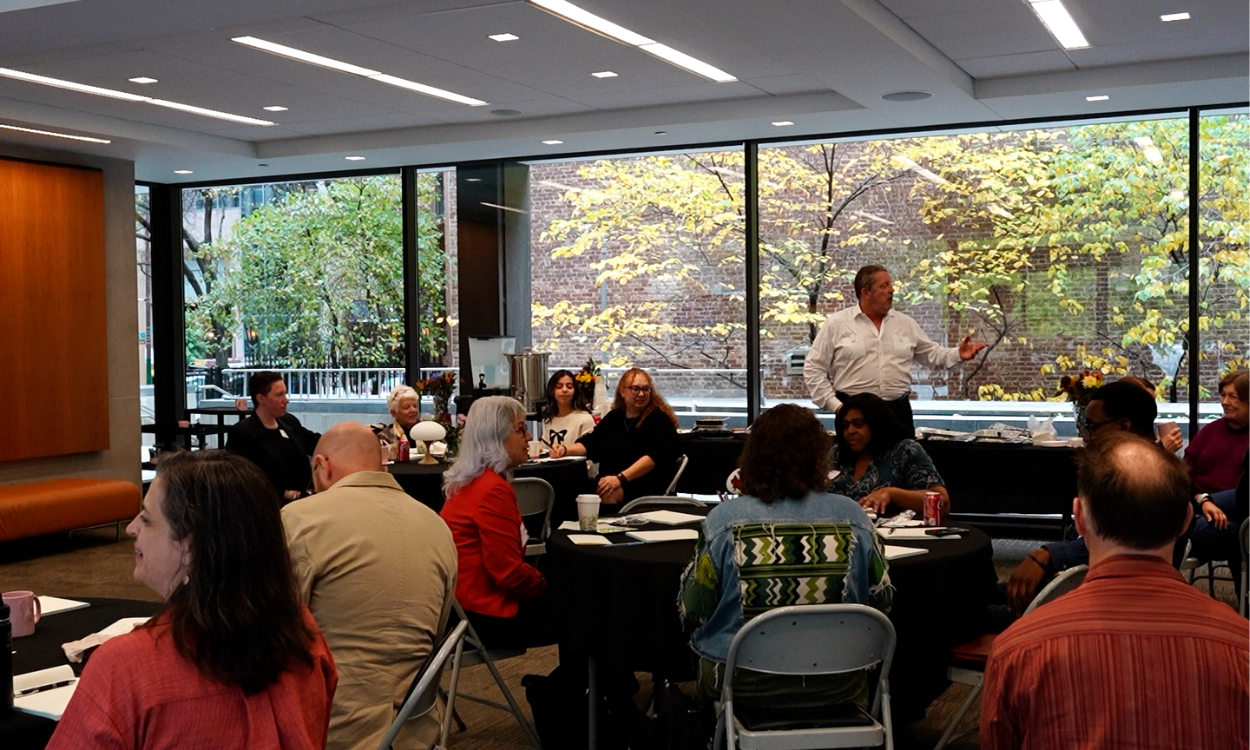
"Having training and having a space to reflect on the bigger work that we all need to do as nonprofits, as agencies that truly care about the community, is extremely valuable," Natalie said. "And it's not something that most funders are willing to provide."
That is the gap Inner Capacity Building exists to fill. When a leader grows, the organization grows with them, and so does its reach into the community. So we will keep making room: twice a year in the cohort, and every other month around the lunch table.
Thank you to Bill Benjamin for leading the day, to Michelle Morrison and Natalie Rodriguez for sharing their stories, and to every partner leader who showed up ready to do the inner work.
Your gift to Episcopal Charities helps us invest in the leaders behind our partners' work, so they can keep serving their communities with clarity, courage, and care.